
Employment · Skills · Rehabilitation · Business · Community
Opportunitychangestrajectories.
We build practical pathways from skills to work — connecting people, employers, training providers and communities to create better futures.
0%
of people released from custody were employed six weeks after release.
Year to March 2026
0%
were employed six months after release from custody.
Year to March 2026
0
people were released from custody during 2025.
Calendar year 2025
0%
proven reoffending rate for the July–September 2024 quarterly cohort.
July–September 2024 cohort (latest available)
01 — The problem
The gap isn't talent.
It's opportunity.
People leaving prison often face barriers to employment, training, housing, confidence, documentation, transport, digital access — and employer trust.
At the same time, employers struggle to find reliable talent. Training providers need stronger recruitment and progression pathways. And communities hold talent that is under-connected to opportunity.
Nextroute exists to connect these pieces.
02 — The changing world of work
The world of work is changing.
Opportunity changes trajectories. But opportunity is changing too.
- AI is changing how people work.
- Automation is reshaping industry.
- Engineering and technical roles are evolving.
- Aviation is developing new technologies and skills.
- Digital skills are becoming essential across almost every sector.
The challenge isn't simply getting people into work. It's making sure people are developing skills that connect to where employers are going.
That's where Nextroute comes in.
We connect people, skills, employers, training providers and communities to build practical pathways into the changing world of work.
Skills for what's next
03 — The evidence
What the data tells us.
Every number on this site is sourced from official statistics, with the population, period and publication date attached. No invented figures.
0%
of people released from custody were employed six weeks after release.
People released from custody, England & Wales · Year to March 2026
What this means: roughly four in five people leave custody without a job waiting. The first six weeks are the steepest part of the cliff.
0%
were employed six months after release from custody.
People released from custody, England & Wales · Year to March 2026
What this means: employment improves with time and support — which is exactly what a structured pathway provides.
0
people were released from custody during 2025.
Releases from custody, England & Wales · Calendar year 2025
What this means: tens of thousands of people re-enter the jobs market each year, most without a route in.
0%
proven reoffending rate for the July–September 2024 quarterly cohort.
Latest published quarterly cohort, England & Wales · July–September 2024 cohort (latest available)
What this means: this is the latest available quarterly proven reoffending figure — it does not represent every person leaving prison. Stable work is one of the factors associated with lower reoffending.
04 — The solution
We build pathways,
not programmes.
People
Skills, confidence, preparation and support.
Employers
Real vacancies, apprenticeships and career pathways.
Training providers
Training, qualifications and progression.
Community
Mosques, Muslim organisations, community leaders and local networks.
Public & institutional partners
Government, probation, prisons, councils, foundations and major organisations.
One connected route — from first conversation to sustained progression. Every stage measured.
How a Nextroute pathway runs.
Understand the person's ambitions, circumstances and starting point.
Build the practical, technical and human skills they need.
Connect them with employers, training providers and opportunity.
Move into employment, an apprenticeship, enterprise or further training.
Support retention, development and longer-term progression.
Person → Skills → Industry → Employer → Employment → Progression. One connected route forward.
05 — Pathways
Find your pathway.
Six doors into the same mission. Pick the one that sounds like you — the experience on the other side is written for you.

06 — Community
Talent exists in every community.
Muslim communities are among the UK's youngest and fastest-growing faith communities — but employment outcomes remain uneven.
We work with mosques, community organisations, businesses and leaders to turn trusted community relationships into practical routes to skills and work — as part of a wider mission across underserved communities. And because the labour market is changing, we connect that talent to where work is going: digital and AI literacy, engineering, clean energy and beyond.
0%
in employment, Census 2021 (70.9% overall)
0%
unemployed, Census 2021 (4.4% overall)
0%
unemployed aged 20–24, Census 2021 (9.0% overall)
ONS Census 2021, England & Wales — historical figures, not current rates. Age structure, economic inactivity, caring responsibilities and student status all contribute to these differences.
07 — Second chances
A sentence should not define a future.
People leaving prison often need more than a CV. They need a realistic opportunity, preparation, someone to trust, an employer willing to give them a chance — and practical support after release.
Skills → preparation → employer introduction
The strongest pathway begins behind the gate: realistic assessment, sector-relevant preparation, and an introduction to an employer before release day arrives.
- Candidate assessment
- Employability & sector skills
- Employer introduction
We are building partnerships with prisons, probation and public-sector partners. This page describes the pathway we are building towards — not existing contracts or access arrangements.
08 — For business
Don't just hire differently. Build a better pipeline.
Your next great employee could be closer than you think. We connect employers — from Muslim-owned SMEs to major corporates — with apprentices, job candidates and training, backed by ongoing support.
Talent
Meet candidates prepared for real vacancies — assessed, briefed and ready.
Impact
Create measurable social value you can report against, not just talk about.
Retention
We support people beyond day one, so hires stay and progress.
What will your workforce need next?
Tell us where your workforce is heading. We want to work with employers to understand emerging roles, changing skills requirements and recruitment challenges — then help build pathways that connect people to those opportunities.
A talent pipeline and skills ecosystem — not a recruitment agency.
Vacancy → Candidate → Training → Employment → Support

09 — Industry-led training
Training that starts with real work.
We believe training works best when it is connected to the reality of the workplace.
We work towards understanding what employers actually need — the technologies they use, the roles they are hiring for and the skills people need to succeed. Where appropriate, we want to work with industry and training providers to help shape practical curricula around those needs.
We don't want to train people for jobs in the abstract. We want to understand the jobs that exist, the skills behind them and the capabilities employers will need next.
From job to curriculum
Employer need
Where the workforce is heading — roles, technologies, gaps.
Job
A real vacancy or role family, not an abstract job title.
Skills
The technical and human skills behind that job.
Curriculum
Training shaped around those skills, with providers and industry.
Practical experience
Real practice in real or simulated working environments.
Candidate
A person prepared for that specific opportunity.
Employment
Into work — with support that continues after day one.
10 — The model
How the model works.
A sustainable social-enterprise model — built on partnerships and delivered value, not solely on donations.
Connection · preparation · support
Skills · employment · progression
Better employment outcomes → stronger communities → stronger businesses.
11 — Where work is going
Pathways into the economy of tomorrow.
Industry areas we're exploring. Not all are active programmes yet — where a pathway is still being developed, we say so.
The future of work needs everyone.
12 — Partners
One ecosystem. One word at the centre.
Built for partnership.
We are in active conversation with employers, training providers and community organisations. Logos below are placeholders — partners will be published here as agreements are confirmed.
13 — Impact
Honest numbers. Reported, not inflated.
Current impact
Pre-launch
Nextroute is a new organisation. Reporting begins with our first cohort — and every figure here will carry a source, a period and a definition.
- People supported—
- People trained—
- Qualifications achieved—
- Interviews secured—
- Jobs secured—
- Apprenticeships started—
- 90-day retention—
- 6-month retention—
- Businesses engaged—
- Employer partners—
- Community partners—
Our 3-year ambition
Targets, not results. This is what we're building towards — and we'll report progress against it openly.
0
People supported in year one
0
People on pathways by year two
0
Lives touched by year three
Why now
The opportunity is hiding in plain sight.
of people are employed six weeks after leaving custody — employment after prison remains low.
Ministry of Justice, year to March 2026
proven reoffending in the latest published quarterly cohort — a significant, persistent challenge.
Justice Data, July–September 2024 cohort
of Muslims aged 16–64 were in employment at Census 2021, against 70.9% overall — outcomes remain uneven.
ONS Census 2021
There is a gap between people who need opportunity and organisations that have opportunity. Our job is to close it.
14 — Stories
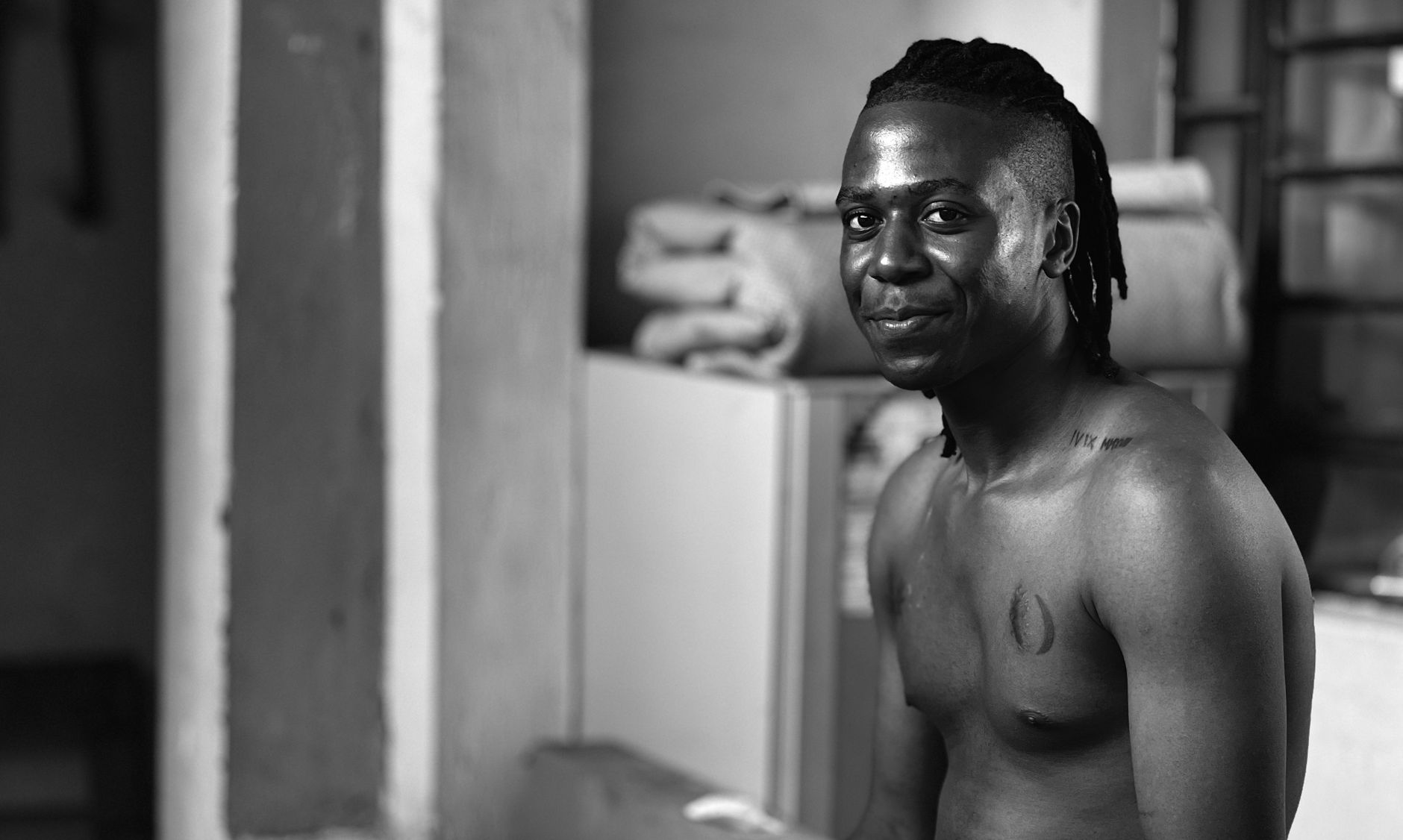
Illustrative photograph — not a real participant
Fictional placeholder — shown during development only. Real stories will be published only with participant consent.
Meet A.
Before
Leaving prison without a clear route into work.
Journey
Six weeks of preparation.
Opportunity
Introduced to an employer.
Outcome
Started work.
90 days later
Outcome to be reported — placeholder.
6 months later
Outcome to be reported — placeholder.
Real participant stories will be told here — with consent, in their own words, with outcomes reported at 90 days and 6 months.